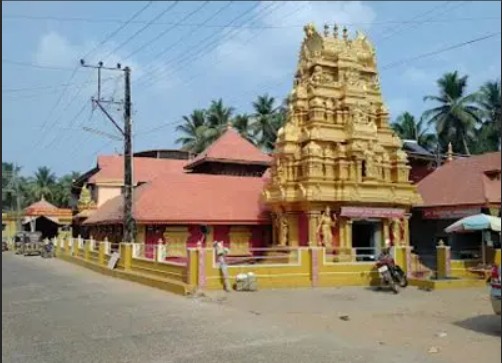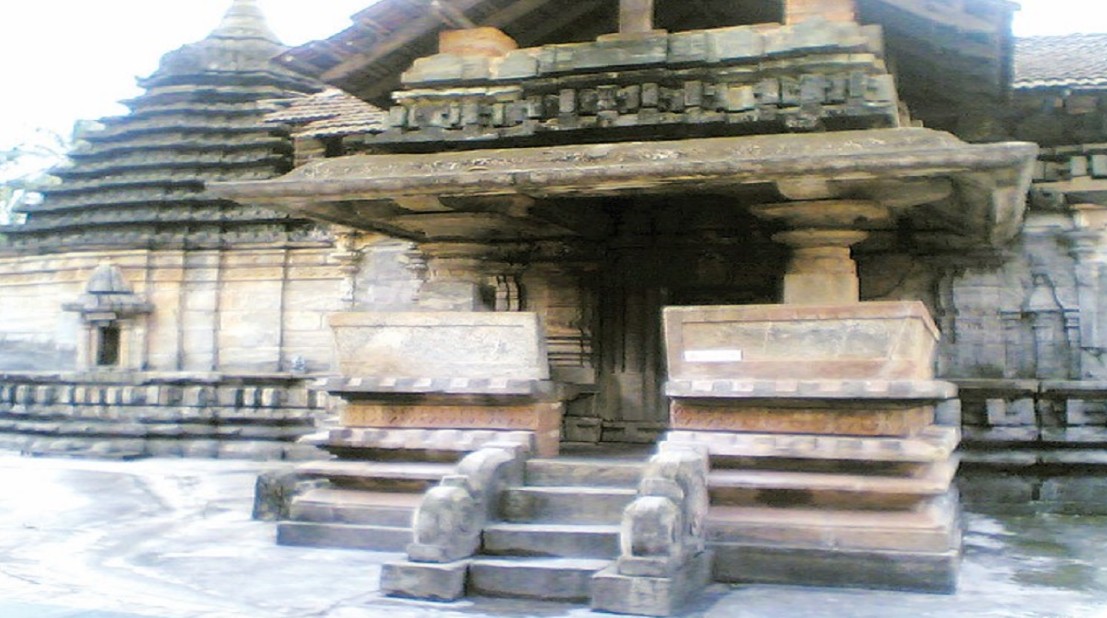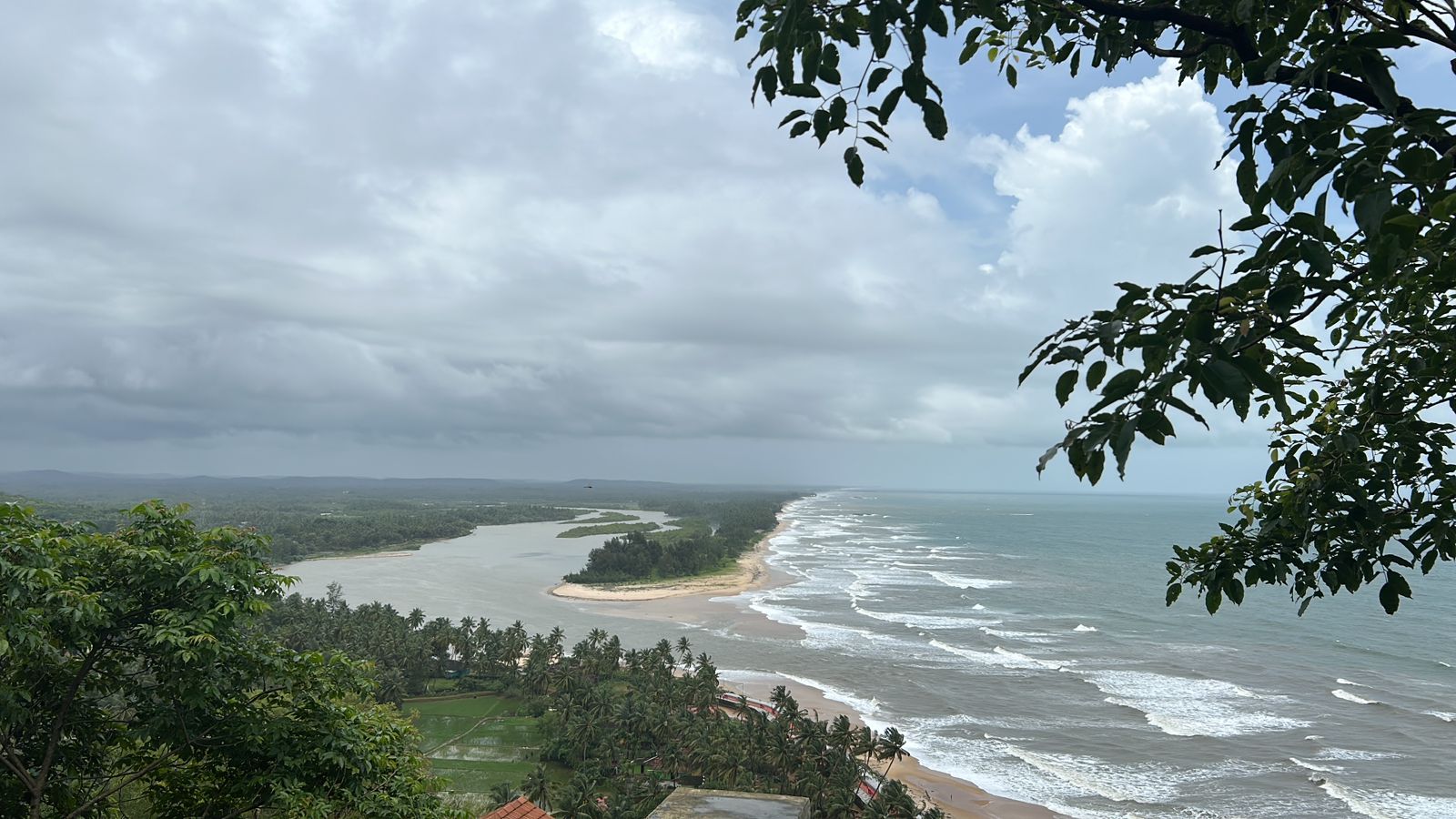




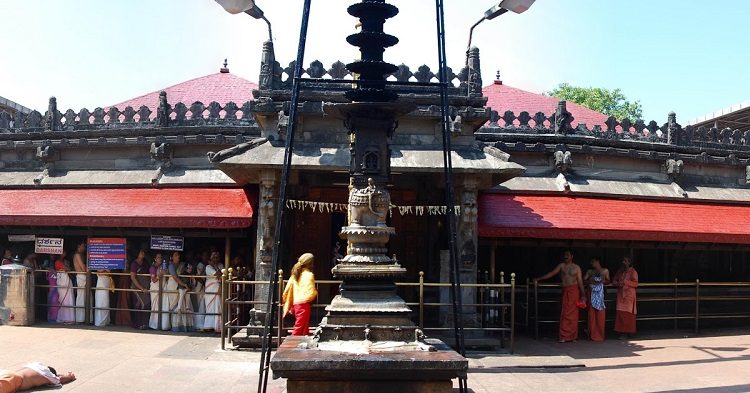
Nestled in the foothills of the scenic Kodachadri Hills on the southern bank of the Souparnika River in the Udupi district of Karnataka, the Sri Kollur Mookambika Temple is one of the most revered Hindu pilgrimage sites in South India. Dedicated to the Mother Goddess Mookambika, a manifestation of Adi Parashakti, this temple is considered one of the seven Mukti Sthalas (places of salvation) created by Parashurama.
The Goddess and Her Unique Form
The presiding deity, Goddess Mookambika, is believed to embody the divine feminine energy in its complete form. The most unique feature of the temple is the central sanctum (Garbhagriha), which enshrines a Swayambhu Linga (a self-manifested phallus). This Jyotirlinga is visibly divided by a golden line (Swarnarekha), a feature unique to this temple.
- The left half of the Linga represents the creative principle, embodying the Goddess Triad: Maha Lakshmi, Maha Saraswati, and Maha Parvati (Maha Kali).
- The right half represents the conscious principle, embodying the male Triad: Brahma, Vishnu, and Shiva (Trimurtis).
Behind this ancient Linga is the beautiful, four-armed Panchaloha idol of Goddess Mookambika, installed by the great philosopher and theologian, Adi Shankaracharya, over 1,200 years ago. The Goddess is worshipped in different forms throughout the day: as Maha Saraswati in the morning, Maha Lakshmi at noon, and Maha Parvati (Maha Kali) in the evening.
Legends and History
The Slayer of the Mute Demon
The name “Mookambika” itself is rooted in a fascinating legend. An Asura (demon) named Kaumasura was performing severe penance to obtain a boon from Lord Shiva.To prevent him from acquiring destructive powers, the Goddess of Speech, Saraswati, intervened and rendered him Mooka (dumb). The demon, now known as Mookasura, grew enraged, but the combined energies of the Tridevi (Saraswati, Lakshmi, Parvati) culminated in a powerful goddess who slayed him. She was henceforth known as Mookambika—the one who killed the mute demon. The spot where Mookasura was vanquished is locally known as Marana Katte.
The Arrival of Adi Shankaracharya
The great sage Adi Shankaracharya is credited with establishing the present form of worship and the idol in Kollur. According to legend, Adi Shankara performed a long meditation on the nearby Kudajadri Hills and was granted a vision of the Goddess. He wished to install her idol in Kerala. The Goddess agreed to follow him on the condition that he must not look back until they reached his destination. At Kollur, doubting whether she was still following him, the sage turned back. Honouring her condition, the Goddess stopped there, declaring she would remain in Kollur forever and blessed the place as her permanent abode. Adi Shankara then consecrated the temple, following the Vijayagama system of worship.
Visitor Information
Darshan Timings
The temple is generally open for Darshan from 5:00 AM to 1:30 PM and then again from 3:00 PM to 9:00 PM every day. However, timings may vary slightly during special poojas and major festivals like Navaratri (the most significant festival) and Rathotsava.
Dress Code
Devotees are requested to wear traditional and modest attire.
- Men typically wear a dhoti and an upper cloth (angavastram) or a shirt/kurta and trousers.
- Women are advised to wear a saree, salwar suit, or a chudidar with a dupatta. Revealing outfits are discouraged.
How to Reach
| Mode of Transport | Nearest Location | Distance from Temple |
| Air | Mangalore International Airport (IXE) | Approx. 130 km |
| Rail | Mookambika Road Railway Station (Byndoor, BYNR) or Kundapura (KUDA) | Approx. 28 km and 32 km respectively |
| Road | Kollur has excellent bus connectivity from major cities in Karnataka (like Mangalore, Udupi, Shivamogga) and the neighboring state of Kerala. | Situated in the town center. |
The Kollur Mookambika Temple is not merely a place of worship; it’s a vibrant center of culture, history, and spiritual energy, continuing to draw devotees from across the nation seeking the blessings of the Divine Mother.