



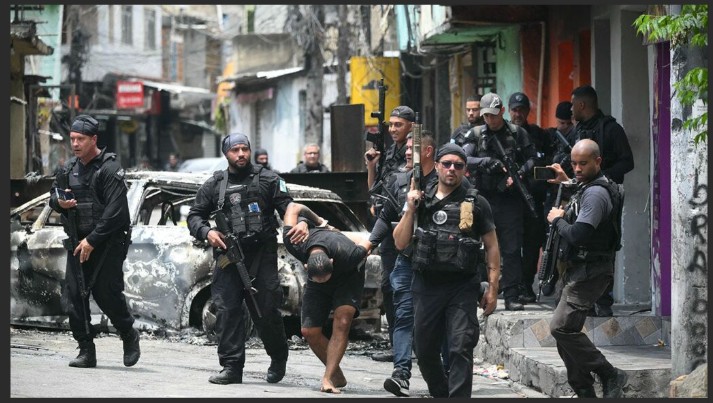
A massive police operation in Rio de Janeiro, Brazil, recently turned into one of the state’s deadliest security actions in history, leaving over 130 people dead amid a fierce crackdown on a powerful drug trafficking organization. The raid has sparked national and international outrage, with human rights groups demanding immediate, transparent investigations.
Key Details of the Operation (Rio de Janeiro)
The joint operation, involving civil and military police, was launched in some of Rio’s largest and poorest neighborhoods, known as favelas, including Complexo do Alemão and Penha.
- Target: The primary target was the Red Command (Comando Vermelho), one of Brazil’s most powerful and notorious criminal organizations involved in drug trafficking and other illicit activities.
- Scale: The raid involved approximately 2,500 security personnel, supported by armored vehicles, helicopters, and drones, following a year-long investigation.
- The Clash: Authorities reported that gang members aggressively resisted the police entry, setting up barricades with buses and allegedly using drones to drop grenades on officers. The resulting gun battle was long and intense.
- Casualties: Official numbers vary, but reports confirm over 130 deaths, including four police officers. At least 113 suspects were arrested, and a large quantity of rifles and drugs were seized. The sheer number of fatalities makes this operation the most violent of its kind in the state’s history.
Backlash and Accusations of Excessive Force
The exceptionally high death toll has led to immediate and intense criticism against the police tactics and the state governor.
- Public Protest: Residents of the affected areas took to the streets, laying out bodies in public squares, and shouting accusations of a “massacre”. They claimed that many of the dead were executed or were innocent civilians, not just drug traffickers.
- Human Rights Concerns: International bodies, including the United Nations Human Rights Office, expressed horror and alarm over the bloodshed. They have called for a swift, transparent, and impartial investigation into the circumstances of the killings, emphasizing that police operations must comply with international standards on the use of force.
- Political Reaction: Rio’s Governor, Cláudio Castro, defended the operation, calling it a successful and “historic day” in the fight against “narco-terrorism.” However, opposition politicians and civil society groups are demanding his resignation, arguing that this military-style operation is a symptom of a failed public security policy that targets the poor.
The state’s Supreme Court has requested detailed information and evidence from the Governor’s office regarding the planning and execution of the operation. The incident has reignited a critical debate in Brazil about police violence and the government’s approach to organized crime in impoverished communities.